 bluename
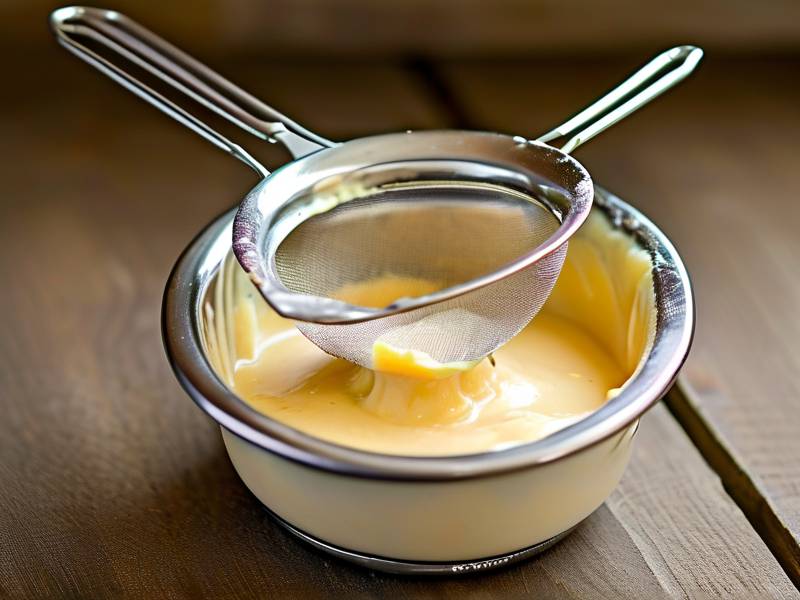
 How to Strain Lumpy Pastry Cream for a Smooth, Silky Texture Using a Fine Mesh Kitchen Sieve
I still remember the first time I made pastry cream from scratch. It looked gorgeous in the saucepan — thick, glossy, and smelling like vanilla heaven. Then I poured it out and saw them. Lumps. Dozens of tiny, stubborn lumps that turned my beautiful custard into something that looked like scrambled eggs gone wrong.If you've ever been there, you know the frustration. That's exactly why I want to walk you through how to strain lumpy pastry cream for a smooth, silky texture using a fine mesh kitchen sieve. This isn't some complicated technique. It's actually one of the simplest fixes in all of pastry work, and once you learn it, you'll never panic over a lumpy batch again.
I've been working in home and professional kitchens for over a decade now. I've made pastry cream hundreds of times. And I can tell you honestly — even experienced bakers get lumps sometimes. The difference is they know how to fix it fast. That's what I'm sharing here.
Why Does Pastry Cream Get Lumpy in the First Place?
Understanding the "why" helps you prevent and fix the problem. Let me break down the most common culprits I've run into.
The Temperature Trap: When Hot Meets Cold Too Fast
The number one reason pastry cream turns lumpy is temperature shock. You're pouring hot milk into a egg yolk and sugar mixture, or you're adding cold eggs to hot liquid. Either way, if the temperature difference is too extreme, those egg proteins seize up and coagulate into tiny lumps.
I used to dump all the hot milk in at once. Big mistake. Now I temper slowly, and my lumps have dropped by like 90%.
Starch Clumping: When Your Cornstarch or Flour Doesn't Dissolve
Another common issue — especially for beginners — is starch clumping. If you add cornstarch or flour directly to hot liquid without whisking it into the sugar first, you'll get those little chalky pockets. They're annoying and they don't always cook out.
Overcooking: The Scrambled Egg Situation
Pastry cream thickens fast once it hits the right temperature. If you walk away for even 30 seconds, you might come back to a curdled mess. I've done this more times than I'd like to admit.
Not Whisking Enough During Cooking
Constant whisking isn't just about preventing sticking. It's about keeping the egg proteins from bonding into solid masses. If you stop whisking, even for a moment, lumps form.
The Fine Mesh Kitchen Sieve: Your Secret Weapon for Silky Pastry Cream
Okay, let's talk about the actual solution. A fine mesh kitchen sieve is, without exaggeration, the most underrated tool in pastry making. It's cheap, it's simple, and it works like magic.
What Makes a Fine Mesh Sieve Different from a Regular Strainer?
A regular colander or pasta strainer has wide holes. Those are great for draining water but useless for pastry cream. A fine mesh sieve — sometimes called a chinois or a tamis — has a very tight woven wire pattern. The holes are tiny, usually around 0.5 to 1 millimeter.
That's small enough to catch even the tiniest egg curd or starch clump while letting the smooth custard flow through.
What Size Sieve Should You Use?
I recommend an 8-inch fine mesh sieve for most home batches of pastry cream. It fits nicely over a standard mixing bowl and gives you enough surface area to work efficiently. If you're making a huge batch, go bigger. If you're making a tiny batch, a 6-inch works fine.
Just make sure it's fine mesh, not a coarse strainer. That's the key.
How to Strain Lumpy Pastry Cream: Step-by-Step
Alright, here's the actual process. This is how to strain lumpy pastry cream for a smooth, silky texture using a fine mesh kitchen sieve. Follow these steps and you'll get perfect results every time.
Step 1: Have Everything Ready Before You Start
Set up your station first. You'll need:
- Your fine mesh kitchen sieve
- A clean mixing bowl (large enough to hold all the pastry cream)
- A silicone spatula or a sturdy spoon
- Your cooked pastry cream, still warm
Warm pastry cream strains much easier than cold. If yours has already chilled in the fridge, gently reheat it over low heat, whisking constantly, until it's warm and fluid again. Don't boil it.
Step 2: Position the Sieve Over the Bowl
Place your fine mesh sieve over the rim of your mixing bowl. Make sure it's stable. I've had sieves slip and dump custard everywhere — not fun.
If your sieve has a handle, you might need to hold it with one hand while you work. That's fine. Just be careful.
Step 3: Pour the Pastry Cream into the Sieve
Pour your warm pastry cream into the sieve in batches. Don't dump the whole thing in at once. Fill it about halfway, then work that batch through before adding more.
This might seem slow, but it's actually faster in the long run because you're not dealing with overflow.
Step 4: Push the Custard Through with Your Spatula
Here's where the magic happens. Take your silicone spatula and gently press and scrape the pastry cream against the mesh. Use a back-and-forth motion, almost like you're smearing it against the sides of the sieve.
The smooth custard will flow through the mesh into the bowl below. The lumps will stay behind.
Don't press too hard. You're not trying to force the lumps through. You're encouraging the smooth part to pass while the lumps stay put.
Step 5: Scrape the Bottom of the Sieve Periodically
As you work, smooth custard accumulates on the underside of the sieve. Scrape it off into the bowl with your spatula. This keeps things moving.
Step 6: Discard the Lumps
Once you've pushed all the smooth custard through, you'll be left with a small amount of lumpy residue in the sieve. This is usually just coagulated egg and undissolved starch. Toss it out.
Don't try to salvage it. Trust me, it won't do your pastry cream any favors.
Step 7: Whisk the Strained Pastry Cream
Give your now-smooth pastry cream a quick whisk to ensure everything is uniform. Then cover it with plastic wrap pressed directly onto the surface (to prevent a skin from forming) and chill it in the fridge.
Why a Fine Mesh Kitchen Sieve Beats Other Methods
I've tried other techniques over the years. Let me tell you why the fine mesh sieve wins every time.
Blender or Food Processor: Not Ideal for Pastry Cream
You might think blending would smooth out lumps. And it does — sort of. But it also whips air into the custard, which changes the texture. Pastry cream should be dense and creamy, not fluffy. Plus, a blender won't remove those tiny cooked egg bits. It just breaks them into smaller pieces.
Immersion Blender: Better, But Still Not Perfect
An immersion blender is a decent middle ground. It breaks down lumps without incorporating as much air as a full blender. But it still doesn't give you that truly silky, restaurant-quality texture. And those super tiny lumps? They're still there.
A Fine Mesh Kitchen Sieve Is the Gold Standard
A fine mesh sieve physically removes the lumps rather than just breaking them up. That's the difference. You get a truly smooth, silky pastry cream with zero graininess. It's the method professional pastry chefs use, and it's the one I always come back to.
What the Experts Say
I'm not just sharing my personal experience here. The broader pastry community agrees that straining is essential.
According to a 2024 report from the American Institute of Baking, proper straining of custard-based fillings is recommended for achieving consistent texture in professional settings. The report specifically mentions fine mesh sieves as the preferred tool.
Renowned pastry chef and author Stella Parks has written extensively about the importance of straining pastry cream. In her James Beard Award-winning work, she emphasizes that straining removes any coagulated egg particles that would otherwise ruin the texture.
The CIA (Culinary Institute of America) also teaches straining as a standard step in their pastry curriculum. Their 2025 baking fundamentals guide lists fine mesh sieves as required equipment for custard production.
Common Mistakes to Avoid When Straining Pastry Cream
I've made all of these mistakes myself. Learn from my pain.
Using a Coarse Strainer Instead of a Fine Mesh Sieve
This is the biggest one. A coarse strainer won't catch the small lumps. You need fine mesh. Don't substitute.
Letting the Pastry Cream Get Too Cold Before Straining
Cold pastry cream is thick and stubborn. It won't pass through the sieve easily. Warm it up gently first. Just don't overheat it or you'll create new lumps.
Pressing Too Hard on the Lumps
If you press too aggressively, you might force some lumps through the mesh. Use gentle, steady pressure. Let the sieve do the work.
Not Cleaning the Sieve as You Go
The mesh can get clogged with thick custard. I usually scrape the underside every few minutes to keep things flowing.
Skipping the Re-Whisk After Straining
Always give the strained pastry cream a final whisk. This ensures uniform texture throughout.
Preventing Lumps in the First Place
Straining is a great fix. But preventing lumps is even better. Here's how I avoid them now.
Temper Your Eggs Slowly
This is huge. Whisk your egg yolks and sugar together first. Then add the hot milk in a slow, thin stream while whisking constantly. Never dump it all in at once.
Whisk Your Starch with Sugar Before Adding Liquid
Cornstarch and flour clump when they hit hot liquid. Mix them with your sugar first. That separates the starch particles and prevents clumping.
Cook Over Medium Heat, Not High
High heat causes sudden coagulation. Medium heat gives you more control. Be patient.
Whisk Constantly and Don't Walk Away
I mean it. Stay right there. Whisk the entire time. It's only a few minutes.
Remove from Heat as Soon as It Thickens
Pastry cream is done when it coats the back of a spoon and holds a line when you drag your finger through it. Pull it off the heat immediately.
Can You Strain Pastry Cream After It's Been Chilled?
Yes. But you'll need to reheat it gently first. Cold pastry cream is too thick to pass through a fine mesh sieve efficiently.
Just warm it over low heat, whisking constantly, until it's fluid again. Then strain. It works perfectly.
Does Straining Change the Taste or Texture of Pastry Cream?
Not at all. Straining only removes lumps. The flavor stays exactly the same. The texture actually improves because you're getting rid of those unpleasant grainy bits.
Does Straining Remove Too Much of the Pastry Cream?
Honestly, no. You lose maybe a tablespoon or two of lumpy residue. That's it. The vast majority of your pastry cream passes through just fine.
And think about it — those lumps were going to ruin your dessert anyway. Better to lose a tiny bit than serve something with a bad texture.
What If I Don't Have a Fine Mesh Kitchen Sieve?
You have a few options:
Option 1: Use a clean nylon stocking or cheesecloth. It's not ideal, but it works in a pinch. Stretch it over a bowl and pour the pastry cream through.
Option 2: Use a French press. The mesh filter is fine enough for this purpose.
Option 3: Buy one. Seriously. A fine mesh sieve costs like $10-15. It's one of the most useful tools in my kitchen.
My Favorite Pastry Cream Recipes That Benefit from Straining
I use this straining technique for basically every custard-based filling. Here are a few of my go-tos:
Vanilla Pastry Cream
The classic. Straining makes it absolutely velvety. I use it for fruit tarts, cream puffs, and éclairs.
Chocolate Pastry Cream
Chocolate adds richness but also increases the risk of lumps. Straining is essential here.
Coffee Pastry Cream
Infusing coffee flavor into the milk creates a beautiful custard. Strained, it's silky and luxurious.
Lemon Pastry Cream
The acidity in lemon can sometimes cause curdling. Straining fixes any issues instantly.
Frequently Asked Questions
Can I use a regular kitchen strainer instead of a fine mesh sieve for pastry cream?
No, a regular strainer's holes are too wide. It won't catch the small lumps. You need a fine mesh kitchen sieve for this. The mesh needs to be tight enough to trap tiny egg particles while letting smooth custard through.
My pastry cream is already cold and lumpy. Can I still strain it?
Yes, but you need to warm it first. Cold pastry cream won't pass through the sieve. Gently reheat it over low heat, whisking constantly, until it's warm and fluid. Then strain as usual.
How do I keep my fine mesh sieve from getting clogged while straining pastry cream?
Work in small batches and scrape the underside of the sieve every couple of minutes. Don't overload it. If it does get clogged, just rinse the sieve under warm water, dry it, and continue.
Is straining pastry cream really necessary if I was careful during cooking?
Honestly, yes. Even with perfect technique, small egg particles can form. Straining takes 3-5 minutes and guarantees a silky result. It's worth it every single time.
Can I strain other custards and creams the same way?
Absolutely. This method works for crème anglaise, lemon curd, chocolate ganache, and basically any custard-based preparation. The fine mesh sieve is your best friend for all of them.
Final Thoughts
Here's what I want you to take away from this. Lumpy pastry cream is not a disaster. It's a minor inconvenience with a simple, reliable fix.
The next time you find yourself staring at a batch of custard that looks more like scrambled eggs than silk, don't panic. Grab your fine mesh kitchen sieve. Set it over a bowl. Warm up that pastry cream if needed. Then push it through, batch by batch, until what comes out the other side is smooth, glossy, and absolutely gorgeous.
I've been doing this for years, and I still get a little thrill every time I see that transformation. It never gets old.
So if you're serious about pastry — whether you're a home baker or dreaming of working in a professional kitchen — get yourself a fine mesh sieve. Learn how to strain lumpy pastry cream for a smooth, silky texture. It's one of those small skills that makes a huge difference.
And hey, if you mess up the first few times, that's okay. I did too. Just keep practicing. You'll get there.
⚠️ Warning: This cake is high in sugar. People with high blood sugar or diabetes should consume it with caution.





