 bluename
 I’ve spent more weekends than I can count testing tart fillings in my tiny kitchen. And honestly, passion fruit curd is one of those things that looks simple on paper but is surprisingly easy to mess up.
The struggle is always the same. You want that bright, tropical tang. But you also need enough sweetness so it doesn’t make your face pucker. If you’re here, you probably already know the pain of a curd that’s either too sharp or cloyingly sweet.
I’ve been there. My first batch was so tart it felt like eating pure lemon juice with a side of regret. My second batch? Let’s just say it could’ve passed for caramel sauce.
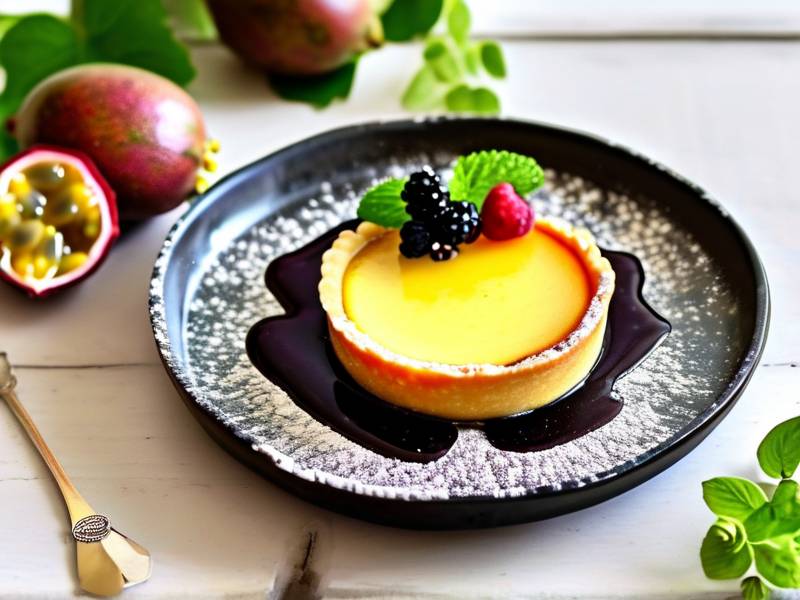
That’s why I put together this guide on how to make passion fruit curd sweet sour balanced homemade tart filling. I’m going to walk you through the exact ratios, techniques, and little tricks I’ve picked up over the years. No fluff. Just what actually works.
Choosing the Right Passion Fruit for Your Curd
Before we even touch a saucepan, we need to talk about the star ingredient. The fruit itself.
I learned the hard way that not all passion fruits are created equal. I used to just grab whatever looked ripe at the store. Then I realized the flavor difference is massive. Some are intensely aromatic. Others taste like nothing.
Fresh vs. Frozen Pulp
Fresh passion fruit is amazing when it’s in season. You cut it open, scoop out the seeds and pulp, and you get this incredible fragrance. But it’s not always easy to find. And sometimes, it’s expensive.
Most of the time, I actually use frozen passion fruit pulp. Surprised? Don’t be. Frozen pulp is picked at peak ripeness and flash-frozen. The flavor is often more consistent than what you’ll find in the produce section mid-winter.
For this specific recipe, you’ll need about 150 grams of pulp. That’s roughly the amount you get from 6 to 8 fresh fruits. If you’re using fresh ones, press the pulp through a sieve to remove most of the seeds. Keep a few seeds for garnish if you like that look.
The Importance of Ripeness
Here’s a small tip I wish someone had told me earlier. The ripeness of your fruit directly affects your sweet-sour balance.
Underripe passion fruit is aggressively sour. It lacks that honeyed floral note that makes the curd special. Overripe fruit can taste slightly fermented. You want fruit that yields slightly to pressure and has wrinkled skin.
Wrinkled skin is actually a sign of sweetness. I know it looks old and sad, but that’s exactly when the fruit is at its sweetest. This tiny detail matters a lot when you’re learning how to make passion fruit curd sweet sour balanced homemade tart filling. The base ingredient sets your entire flavor profile.
The Science Behind the Sweet Sour Balance
This part is key. And I’m not going to bore you with a chemistry lecture. But you need a basic understanding of why balance works the way it does.
Acid hits your tongue and creates that sharp, mouth-watering sensation. Sugar does two things. It adds its own sweetness, but it also rounds off the acid’s rough edges. The trick is finding the point where both are clearly present without one overpowering the other.
Why Butter Matters
I have to admit, my first attempts lacked a certain richness. They were thin and a bit harsh. That’s because I was missing enough butter.
Butter does more than add fat. It coats your tongue and mellows the perception of acidity. It adds a silky texture and a nice mouthfeel. Without enough of it, your curd will taste flat and sharp.
Many people ask me about the ratio of butter to juice. I like to use 85 grams of unsalted butter for every 150 milliliters of passion fruit pulp. This ratio gives you a curd that’s rich but still lets that tangy flavor shine through.
The Role of Egg Yolks
Egg yolks are your thickening agent. They add richness and a lovely golden color. But they also do something subtle. They add a subtle savory roundness that helps balance the acidity.
I use 6 large egg yolks for this recipe. That might sound like a lot, but it’s necessary. It gives the curd that luxurious, almost pudding-like texture. And it helps the filling set up properly inside your tart shell.
Now, if you’re looking for a quick reference on how to make passion fruit curd sweet sour balanced homemade tart filling, I’ll break down the exact ingredient list in the next section. It’s all about precision here.
Mastering the Sweet Sour Balance Technique
Let me walk you through the method. This is where experience really comes into play. I’ve made this curd more times than I can count, and I’ve refined my technique to be as foolproof as possible.
Equipment You’ll Need
First, gather your tools. A medium-sized stainless steel or ceramic bowl. A whisk. A rubber spatula. And a saucepan that the bowl can sit over without touching the water. A fine-mesh strainer is also essential.
If you have a digital thermometer, that helps. But you can get by without it. You just need to pay close attention to consistency.
Step-by-Step Curd Preparation
Let’s get started. I’ll break it down into manageable steps. Follow along, and you’ll see exactly how to make passion fruit curd sweet sour balanced homemade tart filling without any lumps or scrambled eggs.
Create a gentle bain-marie. Fill your saucepan with about 2 inches of water and bring it to a simmer. Reduce the heat so it’s just barely bubbling.
In your bowl, whisk the egg yolks and sugar together. Combine them until the mixture is pale yellow and slightly thickened. It should fall off the whisk in a ribbon. Dissolve the sugar completely before you add any heat.
Now, whisk in the passion fruit pulp. Make sure you’ve strained out the seeds if you’re using fresh fruit. If using frozen pulp, make sure it’s completely thawed before you add it. Mix everything until it’s fully combined.
Place the bowl over the simmering water. Make sure the bottom of the bowl isn’t touching the water. If it does, the eggs will cook too fast and you’ll get scrambled bits.
Here’s where patience matters. You need to stir constantly with your spatula or whisk. I know your arm gets tired. Mine does too. But it’s the only way to prevent curdling.
You’re looking for the moment when the mixture starts to thicken. This will take about 10 to 12 minutes. You’ll notice the mixture goes from liquid to a thin custard. It should coat the back of your spatula. Run your finger across the spatula. If the line holds, you’re ready for the next step.
Remove the bowl from the heat. Now, add your cold butter that’s cut into small cubes. Whisk it in one piece at a time. This isn’t the moment to rush. Add another cube only when the previous one has completely melted.
Let the mixture cool slightly for a couple of minutes. Then pour it through your fine-mesh strainer into a clean bowl. This catches any tiny bits of cooked egg and leaves you with a perfectly smooth curd. Some people also add a pinch of salt here. I include salt because it enhances the flavor and balances the sugar.
At this point, you have a beautiful, glossy curd. But you’re not done yet. The right consistency is crucial for a tart filling.
Testing the Consistency
I like to do a spoon test. Dip a clean spoon into the curd and let it cool for a second. If it coats the spoon evenly and doesn’t run right off, that’s your sweet spot.
It will thicken more as it cools in the refrigerator. So keep that in mind. You want it slightly looser than the final texture you’re aiming for.
One thing I want to stress — this is an active process. You can’t walk away and let it simmer. I’ve made that mistake. It almost ruined my entire batch. Constant stirring is your best friend here.
Pre-Baking Your Tart Shell to Perfection
Honestly, you can’t talk about a perfect passion fruit curd without mentioning the shell. A soggy crust can ruin an otherwise perfect filling. I’ve been through more soggy bottoms than I care to admit.
Blind Baking Tips
Blind baking is a method where you bake the crust without the filling. This ensures it’s fully cooked and crisp before you add your curd.
Line your tart pan with the dough, then chill it again in the freezer for about 30 minutes. This prevents the dough from slumping. Prick the base with a fork to prevent bubbles from forming.
Line the base with parchment paper and fill it with baking beans or pie weights. Bake at 375°F for about 15 minutes. Then remove the weights and bake for another 10 minutes, or until it’s a beautiful golden brown.
Let the shell cool completely before adding your curd. This isn’t optional. If the shell is warm, your curd will melt and make the shell soggy. Cool shell is critical for that final texture.
Sealing the Crust
I also like to brush a thin layer of melted white chocolate over the base of the shell before adding the curd. This forms a barrier that prevents moisture from the curd seeping into the crust. This little trick keeps your bottom crisp for days, not just hours.
Now, once your shell is cool and sealed, pour in your cooled curd. Level the top with a spatula. Place the tart in the fridge to set for at least 4 hours, but preferably overnight. Chilling helps the curd firm up so you get clean slices.
Common Mistakes and How to Fix Them
I want to share the mistakes I see the most. And a few I’ve definitely made myself. This will save you time and frustration as you attempt how to make passion fruit curd sweet sour balanced homemade tart filling.
Curdled Eggs
This is the classic failure. Your mixture suddenly turns grainy and chunky. That’s because the heat was too high or you stopped stirring.
If you catch it fast, you can rescue it by immediately removing the bowl from the heat and pressing the mixture through a sieve. But prevention is better. Keep your heat low and stir non-stop.
Lumpy Curd
Lumps often come from undissolved sugar. Make sure you whisk the sugar and eggs thoroughly before adding the juice. Also, cold butter added too quickly can cause the mixture to seize. Add your butter in small pieces.
Too Runny
This happens when you don’t cook it long enough. The curd needs enough time to reach the thickening point. Remember, it will also thicken as it cools. But it definitely needs to visibly thicken on the stove. If you’re in a rush, this step can’t be skipped.
Too Sour
Sometimes the fruit is just extra tart. If you’ve made a batch that’s too sharp, you can fix it. Whisk in a bit of powdered sugar, a tablespoon at a time, while the curd is still warm. Taste and adjust until it’s right.
Too Sweet
If you overshot the sugar, you can add a few drops of fresh lemon juice or more passion fruit pulp. It sharpens the flavor and cuts the sweetness.
I’ve done both of these fixes many times. It’s all about tasting and adjusting. This is the real secret to how to make passion fruit curd sweet sour balanced homemade tart filling that hits the mark every single time.
Serving and Storage Suggestions
The final step is usually the most fun. You have a gorgeous, balanced tart. But how you store it matters for texture and flavor.
Storing Your Tart
Store the tart in the refrigerator, loosely covered. It will keep well for up to 3 days. But the crust will start to soften gradually. For the best texture, it’s better to eat it within 24 hours.
The curd itself can be made ahead of time. You can store it in an airtight jar in the fridge for about a week. Just give it a good stir before using it to smooth out any separation.
Can You Freeze It?
Yes. You can freeze the curd itself in an airtight container for up to 3 months. To freeze a whole assembled tart, you’re rolling the dice. The crust might change texture. I’d personally only freeze the curd, then assemble fresh when you need it.
How to Serve
Serve the tart cold. Add a dollop of lightly sweetened whipped cream for contrast. Fresh berries pair beautifully with the tropical flavor.
You can also use this curd as a spread on pancakes. Or as a topping for yogurt. It’s versatile. I honestly end up making extra just to have it in the fridge for breakfast.
FAQ About Making Passion Fruit Curd Tart Filling
Can I use passion fruit juice instead of pulp?
You can, but it’s not the same. Pulp has fiber, which helps with texture and flavor intensity. If you have to use juice, reduce it to about 100 milliliters first. Then add extra butter to compensate for the lack of fiber.
Why did my curd taste like scrambled eggs?
That’s a sign your eggs got too hot, too fast. This is a common issue when learning how to make passion fruit curd sweet sour balanced homemade tart filling. Use a bain-marie and keep the heat gentle. Also, check your temperature. If it goes above 170°F, the eggs will curdle.
How do I fix a curd that’s too thick?
Your curd will thicken significantly in the fridge. If yours is too thick, it probably cooked too long. Before using it, place the jar in a bowl of warm water for a few minutes. Stir it until it loosens slightly. If that’s not enough, whisk it with a spoonful of warm water.
Conclusion
Getting the perfect balance isn’t luck. It’s about understanding your ingredients and controlling your heat. It’s about tasting as you go and trusting your instincts.
I hope this guide on how to make passion fruit curd sweet sour balanced homemade tart filling gives you the confidence to try it yourself. Start with the exact ratios I gave you. Then, adjust based on your taste and the ripeness of your fruit.
Remember to keep your temperature low and your stirring constant. You’ll know you got it right when the curd coats your spoon, tastes bright, and doesn’t make your cheeks ache.
Now go make some delicious, beautiful tarts. And don’t forget to save a little curd for breakfast toast. Trust me, you’ll want it.
⚠️ Warning: This cake is high in sugar. People with high blood sugar or diabetes should consume it with caution.





