 bluename
 Warm Fruit Compote with Plain Vanilla Ice Cream: The Perfect Easy Dessert
I still remember the first time I tried warm fruit compote over vanilla ice cream. It was at a tiny dinner party, and the hostess just threw some frozen berries in a pan with sugar. Ten minutes later, she spooned it over store-bought vanilla ice cream. Honestly, I thought it would be a mess. Instead, the contrast of hot, jammy fruit against cold, creamy ice cream stopped the whole table mid-conversation. That moment changed how I think about desserts. You don't need a fancy pastry chef technique. You just need to know how to serve warm fruit compote paired with plain vanilla ice cream scoops the right way.
Since then, I have made this dessert more times than I can count. I have tested different fruits, adjusted sugar levels, and messed up my fair share of batches. Some went too watery. Some were too tart. One time, I forgot the lemon juice and the whole thing tasted flat. So trust me when I say that the details matter. The temperature matters. The timing matters. Even the texture of your compote matters. Let me walk you through everything I have learned.
Why This Dessert Works Better Than You Think
You might be wondering if this is just a simple fruit sauce. In a way, yes. But the magic comes from how the temperatures play off each other. Warm, glossy fruit meets cold, dense vanilla ice cream. The fruit slightly melts the ice cream's surface, creating a ripple of cream and juice. It is not a complicated concept, but the execution can make or break it.
Unlike a heavy pie or a layered cake, this dessert feels light. It works for weeknights and dinner parties alike. You can prep components in advance, which is a lifesaver when you are hosting. Also, plain vanilla ice cream acts like a blank canvas. It does not compete with the fruit. Instead, it adds richness and balances any tartness. That is why I never use flavored ice cream like butter pecan or chocolate chip here. Vanilla is safe. Vanilla is correct.
Another reason this works? Seasonal flexibility. You can use summer stone fruits like peaches and plums. Or fall apples and pears. Or even frozen berries in deep winter. I have made this in July and in January, and both versions hit differently. The core formula never changes. You just adjust the sweetener and spice to match the fruit.
The Right Fruits for Warm Compote
What matters most in this entire process is your fruit selection. I have tried almost everything, and I will tell you straight up that some fruits work better than others.
Berries Blueberries, raspberries, blackberries, and strawberries are my go-to. They break down fast and release natural pectin. That means your compote becomes glossy and thick without needing cornstarch. I love mixed berry combos because they give you a range of tart and sweet. Strawberries can be tricky. They release a lot of liquid. I usually slice them and let them sit with sugar for a few minutes before cooking.
Stone Fruits Peaches, nectarines, plums, and cherries are excellent choices. They hold their shape better than berries. When you cook them, you end up with distinct fruit pieces swimming in a delicious syrup. I like to cut peaches into thick slices, not small cubes. Small pieces disintegrate. Thick slices stay intact and give you something to bite into.
Apples and Pears These have a firmer texture. They take longer to cook. I normally slice them thin and add a splash of water or apple cider to help them soften. Cinnamon and star anise go great with these. They give you a more autumnal, cozy vibe.
Frozen vs. Fresh Here's a reality check. You do not need fresh fruit. Frozen fruit is often picked at peak ripeness and flash-frozen. It is cheaper, available year-round, and honestly perfect for compote. The only difference is that frozen fruit releases slightly more water. You just need to cook it a bit longer to let that liquid reduce. The taste is nearly identical. I often use frozen cherries and berries when I am craving this dessert in winter.
My Favorite Golden Ratio
Let me give you a simple starting point that works for nearly every fruit you pick. I use about 3 cups of prepared fruit. That can be fresh or frozen. I add 1/4 to 1/3 cup of granulated sugar. The amount depends on how sweet your fruit already is. For peaches and very ripe berries, I lean toward 1/4 cup. For tart fruits like raspberries or plums, I go up to 1/3 cup.
Then I add 1 to 2 tablespoons of fresh lemon juice. This is non-negotiable. The acid brightens the fruit flavor and balances sweetness. Without it, the compote tastes flat. I have tested this. I have forgotten it. You will not believe the difference a tablespoon can make.
Optional flavor boosters include a pinch of salt, a scraped vanilla bean pod (not the extract yet), or a cinnamon stick. Salt sounds weird but it actually enhances the fruit's natural sweetness. Use just a pinch. Not more.
Step-by-Step Cooking Method
Now let me get into the actual process. This is simple, but I want to walk you through my exact routine so you can avoid the mistakes I made.
Step 1: Prep your fruit If you are using berries, rinse and drain them. For strawberries, hull and slice them in half or quarters. For peaches and nectarines, peel them if you want a smoother texture. I actually like leaving the skin on peaches. It gives you those lovely red streaks. But if you prefer no skin, blanch them in boiling water for a minute and the skin slides right off.
For apples and pears, core them and cut into thin slices. Remove the seeds. The thinner you slice them, the quicker they cook.
Step 2: Start the cooking Heat a heavy bottomed pan or a Dutch oven over medium heat. I prefer stainless steel or enameled cast iron. Non-stick works too, but you get less evaporation. Add a knob of butter? That is optional. I usually skip butter because I want the fruit flavor to stay clean. But some people swear by a little butter for richness. If you do add it, use just a small teaspoon.
Toss in your fruit, sugar, lemon juice, and salt. Stir gently to coat everything.
Step 3: Wait and listen This part requires patience. Let the fruit cook over medium heat until it starts to release its juices. You will hear that gentle bubbling sound. This usually takes about 3 to 5 minutes. Do not stir too often. You want the fruit to soften and release its liquid without breaking down completely.
Step 4: Let it become syrupy Once the fruit has released liquid, increase the heat slightly. Let the mixture bubble at a gentle simmer. The liquid will start to reduce and thicken into a syrup. This takes anywhere from 8 to 12 minutes for berries and stone fruits. Apples and pears might take longer.
I always taste it at this point. If it is too tart, I add a bit more sugar. If it is too sweet, I add another squeeze of lemon. If the syrup is still too thin, I keep cooking until it coats the back of a spoon.
Step 5: To mash or not to mash This is a personal choice. Sometimes I want a chunky compote with distinct fruit pieces. Other times, I prefer a smoother, jammy texture. If I want it smooth, I use a potato masher and lightly crush some of the fruit. Keep some pieces intact for texture. That's the sweet spot.
Step 6: Cool slightly Here is a mistake I made early on. I spooned boiling hot compote directly over ice cream. The hot liquid melted the ice cream instantly into a puddle. Not terrible, but not ideal. You want the compote warm, not scorching.
Take the compote off the heat and let it rest for 5 to 8 minutes. It will continue to thicken as it cools. Warm compote, not hot compote, is the goal.
How to Plate the Dessert Properly
Now comes the fun part. How you assemble this makes a difference in how it tastes and looks. I usually serve this in shallow bowls. Wide bowls work best because they let the compote spread slightly.
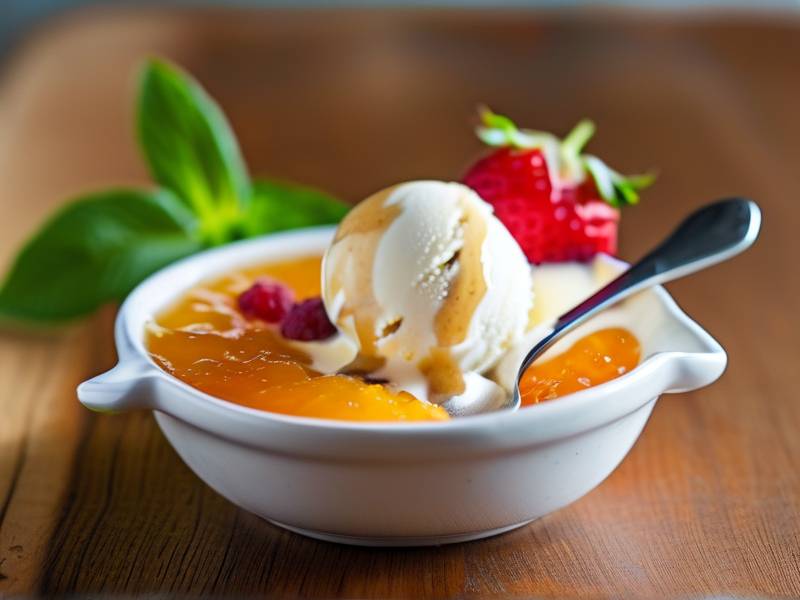
First, scoop the plain vanilla ice cream into the bowl. I like to use two scoops for a generous serving. Try to make the scoops round and firm. If your ice cream is too soft, it will melt quickly. Keep the scoops centered. Leave some room around the edges for the compote.
Then, spoon the warm compote over the ice cream. Do not drown it. The ratio should be roughly 1 part compote to 2 parts ice cream. Too much compote makes it overly sweet and masks the vanilla. Too little, and you miss the contrast. I usually use about 3 to 4 tablespoons of compote per bowl.
Drizzle some of the syrup over the sides of the ice cream. Let it slide down into the bowl. That creates a nice pool underneath. When you dig in, you get ice cream on one end and warm fruit syrup on the other.
Serving immediately is mandatory. Do not let it sit on the counter. The bowl will warm up, and the ice cream will become soup. I always get the bowls ready and have the spoons out before I finish cooking the compote. That way I can plate and serve within a minute.
Flavor Pairings You Should Try
Once you nail the basic version, you can switch things up. I enjoy experimenting with different combos. Here are some of my favorites that have become staples.
Mixed Berry and Lemon Zest This is my default. I use blueberries, raspberries, and blackberries. Add a strip of lemon zest to the compote while it cooks. Pull it out before serving. The citrus aroma is subtle but noticeable. It brightens the whole dessert.
Peach and Vanilla Bean Peaches love vanilla. I add half a scraped vanilla bean pod to the compote while it simmers. The vanilla seed will speckle the syrup. It looks fancy and tastes even better. Serve over a scoop of plain vanilla ice cream. The double layer of vanilla works because the fruit keeps it interesting.
Cherry and Almond If you can get your hands on fresh or frozen cherries, try this. Cook the cherries with a tablespoon of amaretto or a drop of almond extract. Be careful, almond extract is strong. A tiny splash is more than enough. The nutty note pairs beautifully with the dark cherries.
Apple, Cinnamon, and Maple For a fall version, I sauté apples with a tablespoon of maple syrup and a cinnamon stick. The maple replaces some of the granulated sugar. It gives the compote a deeper, slightly smoky sweetness. Great for when you want something cozy.
Spiced Plum and Cardamom Plums can be tart and complex. I add a crushed cardamom pod to the pan. Cardamom has a floral, slightly earthy flavor that works really well with plum. This one is my secret weapon for dinner parties. Everyone always asks what the spice is.
How to Macerate Fruit Quickly
Sometimes I am in a pinch and do not have time to cook a full compote. Macerating is a quick alternative. It is not truly a compote, but it gets you quite close. I slice fruit, toss it with sugar and lemon juice, and let it sit for 20 minutes. The sugar pulls the liquid out of the fruit, creating a syrup. It does not have the same cooked depth, but it is still delicious.
If you go this route, warm the fruit mixture gently in a saucepan before serving. That takes only 2 to 3 minutes. You get a soft, syrupy texture without a lengthy cook. It is a good weeknight option when you are tired and want something quick.
Avoiding Common Mistakes
I have made plenty of errors in the kitchen. Let me save you the trouble. Here are the top mistakes I see and how to fix them.
Watery compote This usually means you did not cook it long enough, or you started with too much liquid. Fix it by turning up the heat and simmering until the syrup reduces. You can also add a teaspoon of cornstarch slurry if you are really in a hurry.
Overly sweet disaster Some fruits are naturally very sweet. Peaches and very ripe strawberries can turn your compote into candy. Balance it with extra lemon juice. Add a pinch of salt too. That helps cut sweetness.
Granulated sugar that never dissolves This happens when the heat is too low and the sugar sits on top of the fruit. Make sure you stir the fruit immediately after adding sugar. Let the fruit release its liquid, then stir again. The sugars will dissolve as cooking progresses.
Fruit that falls apart completely If you cook berries too long, they become mush. To prevent that, use a lower heat and shorten the cooking time. Berries do not need more than 8 to 10 minutes. You just need them soft but not pulverized.
Ice cream that melts too fast This is a serving issue. I always chill my bowls in the freezer for 5 minutes before plating. That makes a big difference. Also, keep the ice cream in the freezer until the very last second. Do not scoop it and leave it on the counter while the compote finishes.
Making the Dessert Ahead of Time
I often prepare the compote 2 to 3 days in advance. It saves me a lot of stress when hosting. Store the compote in an airtight container in the refrigerator. It lasts up to 5 days but I doubt it will make it that long.
When I am ready to serve, I reheat it gently on the stovetop or in the microwave. You want it warm, not boiling. I'll be honest, the texture changes slightly the next day. The fruit becomes more jam-like. If that is not what you want, add a tiny splash of water when reheating to loosen it up.
The great thing about prepping in advance? The flavors have time to meld. A compote that rests overnight tastes deeper and more cohesive. I sometimes prefer it on day two.
The Role of Good Vanilla Ice Cream
I need to emphasize something about the ice cream. The better your vanilla ice cream, the better this dessert tastes. That sounds obvious, but people underestimate it.
High quality vanilla ice cream has a rich custard base and uses real vanilla extract or vanilla bean. Cheap ice cream is often full of air and artificial flavoring. It melts into a watery mess. Spend a little extra on a good brand. Look for ice cream that lists cream and milk as the first ingredients. Avoid ones with corn syrup or artificial vanilla.
If you have an ice cream maker at home, homemade vanilla is obviously the best. But you do not need to go that far. A solid store-bought brand in a dark blue or black carton usually performs well. Some local creameries make outstanding pints too.
I will point out that plain vanilla is the right pick here. You might be tempted to use vanilla bean, which is great. But do not use dulce de leche or caramel swirl. Those add competing flavors that mask the fruit. Keep it simple.
Healthy Alternatives and Adjustments
Many people ask me about lowering sugar. I completely get it. You can reduce the sugar in this recipe to just a tablespoon or even omit it entirely. The compote will be more tart and less syrup-like. But the natural fruit sweetness still shines.
If you are diabetic or watching your sugar intake, here is the honest truth. Fruit compote still contains natural sugars from the fruit. Plus, if you use additional sugar, it adds up. You can try a sugar substitute like stevia or monk fruit sweetener. I have tested stevia, and it works, but the texture is a bit different. There is less of that glossy, thick syrup.
Another adjustment is using Greek yogurt instead of ice cream. It is not the same dessert, but it is still tasty. The tanginess of yogurt pairs nicely with sweet compote. If you are avoiding dairy, coconut milk ice cream or oat milk ice cream works well too.
As a general note, if you have concerns about blood sugar, you should discuss this dessert with your doctor before adding it to your routine.
Why I Choose Compote Over Pie or Crumble
I love pie as much as the next person. But compote has some real advantages. It comes together in under 30 minutes. There is no crust to roll, no oven to heat, no chilling the dough. You just cook fruit in a pan. That is it.
Fruit compote also lets the fruit be the hero. In a pie, you hide the fruit inside layers of pastry. In a crumble, you cover it with streusel. Here, the fruit sits right on top of your ice cream, glossy and bright. You taste every fruit's natural character.
Plus, it is forgiving. You cannot really burn a compote unless you walk away for a long time. It does not require precision. That makes it perfect for beginner cooks. I often tell new home cooks to start with compote. It builds confidence because it works nearly every time.
What to Drink With This Dessert
When I serve this, I like a simple beverage on the side. For an adult version, a small glass of sweet dessert wine like Moscato d'Asti works well. It is light and slightly bubbly, which cuts through the creaminess. Coffee is another favorite. Espresso or a dark roast balances the sweetness nicely.
For a non-alcoholic option, I brew a pot of chamomile or Earl Grey tea. Herbal teas are particularly nice because they are gentle. The warmth of the tea pairs nicely with the warm compote.
Adapting the Recipe for Dietary Restrictions
I have friends who are vegan, lactose intolerant, or gluten sensitive. The good news? This dessert is naturally gluten free. No flour, no pastry.
For dairy free, choose a high quality coconut-based vanilla ice cream. My favorite brand is from a local creamery that makes an incredible coconut vanilla. It is creamy, not icy. Cashew milk versions are also smooth.
For a vegan version, skip the butter in the compote (I usually skip it anyway). Use cane sugar or coconut sugar. Everything else remains the same.
Testing Notes from My Kitchen
I have made this dish more than fifty times. I feel confident sharing some exact testing notes that might help you.
- With 3 cups of blueberries and 1/4 cup sugar, the compote yielded about 1 and 1/2 cups. That is enough for 4 to 6 servings with ice cream.
- Frozen berries take about 4 to 6 minutes longer to release their juice than fresh ones. Plan accordingly.
- Citrus zest should always be added at the end of cooking, not the beginning. It retains more of its aromatic oils.
- A stainless steel pan evaporates liquid faster than non-stick. This reduces cooking time. I now always use stainless steel for compotes.
- Adding a pinch of ground cinnamon enhances dark fruits like cherries and plums. It does not work well with peaches or citrus fruits.
Serving Ideas Beyond the Bowl
You might think this only works as a bowl dessert. That is not true. I use warm compote in other ways too.
On Toast Spoon the compote over thick toasted bread with a smear of mascarpone. It is a luxurious weekend breakfast.
In Oatmeal Stir a few tablespoons into morning oats. It adds sweetness without needing additional syrup.
On Pancakes Instead of maple syrup, I drizzle compote over pancakes and waffles. Temps be a bit messy, but it is delicious.
Over Cheesecake Slices Make the compote thicker and pour it over cheesecake slices before serving. This is a showstopper.
As a Yogurt Topping Plain Greek yogurt with warmed compote makes a satisfying snack. Add a sprinkle of granola if you want crunch.
Frequently Asked Questions
Can I use frozen fruit instead of fresh in a warm fruit compote with plain vanilla ice cream scoops? Yes, absolutely. I do it all the time. Frozen fruit is quite convenient. The main difference is that frozen fruit releases more liquid during cooking. You may need to cook it for 5 to 10 extra minutes to let the syrup reduce. In terms of flavor, frozen berries often taste even better than fresh ones because they are picked at peak ripeness. No need to thaw before cooking. Just toss them into the pan straight from the freezer.
How long will the fruit compote last in the refrigerator if I keep it to pair with vanilla ice cream? It stays good for up to 5 days in a sealed container. I recommend storing it in a glass jar or any airtight container. The texture will become more jam-like as it rests. To refresh it, add a splash of water or lemon juice before reheating. Keep in mind that you should always use a clean spoon to avoid introducing bacteria. I typically use mine within 3 days because it disappears fast anyway.
Can I make this compote without any added sugar for a healthier dessert with vanilla ice cream? You can. But you should know that the texture will be runnier and less syrupy without sugar. That is because sugar helps thicken and bind the fruit's juices. If you want a low-sugar option, use a very ripe fruit that is naturally sweet, like peaches or mangoes. You might also add a mashed ripe banana to thicken the mixture naturally. For a sugar substitute, monk fruit sweetener works well. It does not caramelize quite like sugar, but it adds sweetness without calories. Always check with your healthcare provider when making significant changes to your diet.
Why does my compote become too watery when I use strawberries? Strawberries are famous for releasing tons of liquid. They have high water content. To fix this, start with slightly less sugar, because sugar pulls out more liquid. Slice your strawberries and let them sit in sugar for 20 minutes, then drain off the excess juice before cooking. Or just cook them longer at a higher simmer to allow the liquid to evaporate. With strawberries, I always expect a longer simmer time. There is no shortcut around it.
Should I add lemon juice even when I use very sweet compote for the vanilla ice cream scoops? Yes, always. Lemon juice is the balancing ingredient that keeps a fruit compote from becoming one-dimensional. It brightens the entire flavor profile. Even if your fruit is sweet, a little acidity cuts through the sugar and enhances the fruity notes. You can use fresh lemon juice, but bottled works fine too. Start with a teaspoon and taste. Add another teaspoon if you want more brightness.
One Thing That Surprised Me
I want to be honest about one thing. I used to think warm fruit compote paired with plain vanilla ice cream scoops was only for special occasions. Then I realized it is one of the easiest reliable desserts out there. When you are tired and want something sweet, this is fast. When you need to impress dinner guests, this still works.
The combination of temperatures and textures is something that feels fancy but is actually quite rustic. And everyone, from kids to grandparents, enjoys it.
Sometimes the simplest things really are the best. You do not need a pastry bag or a chef's torch. Just a pan, some fruit, and a good carton of vanilla ice cream.
My Final Advice for First-Timers
If you are new to making warm fruit compote with plain vanilla ice cream scoops, here is my final checklist for success. Give yourself a little extra time, even though the process is quick. It helps if you are not rushing.
Use fresh or good quality frozen fruit. Skip the fruit that looks mushy or brown. That will affect the final taste. Taste the compote as you go. Adjust sugar and lemon juice based on your preference. There is no single perfect formula. The proportions I gave are only a starting point.
And most importantly, serve it immediately after adding the compote. This dessert waits for no one. The contrast between warm and cold is the entire point. If you let it sit, you lose the magic.
I genuinely hope you try this at home. I think you will be surprised at how delicious such a simple dish can be. Feel free to make it your own once you get the basic technique down. Swap fruits. Add your favorite spices. Make it your signature dessert. I promise it will not disappoint.
⚠️ Warning: This dessert is high in sugar. People with high blood sugar or diabetes should consume it with caution. If you choose to make a low-sugar or sugar-free version, this formula may still contain natural fruit sugars. Consult a medical professional before consumption if you have dietary restrictions or health conditions.





