 bluename
 There's something truly special about a homemade cheesecake. That rich, creamy texture and the perfect balance of sweet and tangy is a dessert that feels both luxurious and comforting. While it might seem like a daunting task reserved for professional bakers, I'm here to show you that making a fantastic cheesecake from scratch is absolutely achievable.
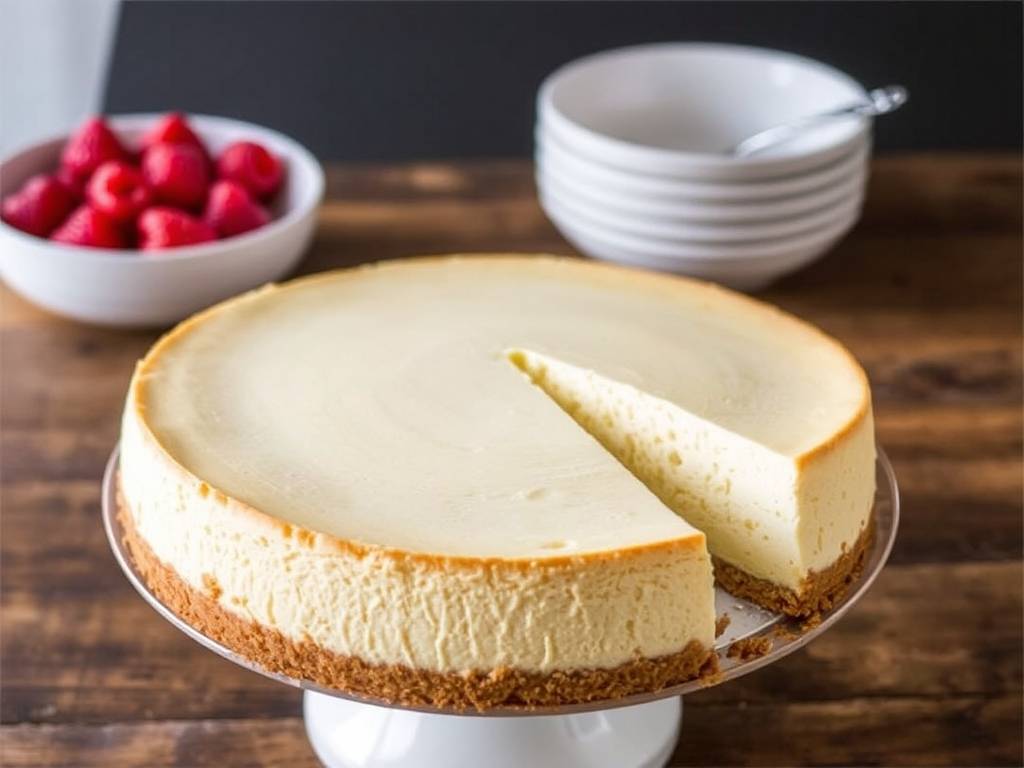
The secret to a flawless cheesecake lies not in complex techniques, but in understanding a few key principles and following the steps with care. This guide will walk you through a classic, no-fail recipe for a creamy New York-style cheesecake, explaining the 'why' behind each step to ensure your baking success.
Let's start by gathering everything we need. Having your ingredients prepared and at the right temperature is the first crucial step to a smooth, lump-free cheesecake filling.
For the Crust:
1 ½ cups (150g) graham cracker crumbs
¼ cup (50g) granulated sugar
6 tablespoons (85g) unsalted butter, melted
A pinch of salt
For the Cheesecake Filling:
4 blocks (32 oz or 900g) full-fat cream cheese, softened to room temperature
1 cup (200g) granulated sugar
1 cup (240g) full-fat sour cream, at room temperature
3 large eggs, at room temperature
1 teaspoon pure vanilla extract
2 tablespoons all-purpose flour (this helps stabilize the cake)
A pinch of salt
Essential Equipment:
9-inch springform pan
Aluminum foil
Electric hand mixer or stand mixer
Large roasting pan for the water bath
Mixing bowls
The most common mistake in cheesecake making is using cold ingredients. When cream cheese is cold, it will never become perfectly smooth, no matter how long you mix it. This leads to a lumpy batter which can bake unevenly. Taking the time to let your cream cheese, eggs, and sour cream sit on the counter for about an hour beforehand is non-negotiable for that silky-smooth texture we're after.
Now, let's create the foundation of our cheesecake: the crust.
Preheat your oven to 325°F (160°C).
Take your springform pan and wrap the outside tightly with two layers of heavy-duty aluminum foil. This is a very important step to prevent water from leaking into the pan during the water bath stage later on.
In a medium bowl, combine the graham cracker crumbs, sugar, and a pinch of salt. Pour in the melted butter and mix with a fork until all the crumbs are evenly moistened. It should feel like wet sand and hold together when you pinch it.
Transfer the crumb mixture to your springform pan. Press the crumbs firmly and evenly into the bottom of the pan and about halfway up the sides. Using the flat bottom of a measuring cup or a glass helps to create a compact, even layer.
Place the crust in the preheated oven and bake for 10 minutes. This pre-baking, or "blinding," helps the crust set and prevents it from becoming soggy later. After 10 minutes, remove it from the oven and let it cool on a wire rack while you prepare the filling. Leave the oven on.
This is where the magic happens. The goal here is to incorporate as little air as possible while achieving a perfectly smooth consistency.
Place the softened cream cheese in the large bowl of your mixer. Using the paddle attachment (if using a stand mixer) or the beaters on a medium-low speed, beat the cream cheese alone until it is completely smooth and free of lumps. Scrape down the sides and bottom of the bowl thoroughly. This initial step is critical for a lump-free cheesecake.
With the mixer on low, gradually add the sugar. Once incorporated, scrape the bowl down again.
Now, add the sour cream, vanilla extract, flour, and salt. Mix on low speed until just combined. Scrape the bowl down once more. At this stage, overmixing is your enemy, as it incorporates too much air.
Add the eggs one at a time, mixing on low speed until each egg is just incorporated before adding the next. After the last egg is mixed in, stop the mixer. The batter should be smooth, creamy, and thick. Do not overmix after the eggs are added.
Pour the finished cheesecake filling into the slightly cooled crust. Use a spatula to smooth the top. Now, gently tap the pan on the counter a few times to release any large air bubbles that may have been trapped during mixing.

The water bath, or bain-marie, is the single most important technique for preventing cracks and ensuring an incredibly creamy texture. The hot water surrounding the pan provides gentle, even heat, which cooks the cheesecake slowly and prevents it from drying out, rising too quickly, and then collapsing.
Place your foil-wrapped springform pan into a large roasting pan. Carefully pour the cheesecake batter into the springform pan if you haven't already.
Bring a kettle of water to a boil. Move the roasting pan with the cheesecake to the oven rack. Then, carefully pour the hot water into the roasting pan until it comes about halfway up the sides of the springform pan. Be careful not to get any water inside the foil.
Bake the cheesecake for about 1 hour and 15 minutes to 1 hour and 30 minutes. The cheesecake is done when the edges are set, but the center still has a slight jiggle—think of the texture of Jell-O. It will firm up as it cools. The center should not be liquid, but a gentle wobble in a small area (about 3-4 inches in diameter) is perfect.
Turn off the oven and crack the oven door open with a wooden spoon. Let the cheesecake cool slowly in the oven for one hour. This gradual temperature change is another key step to prevent cracking.
After an hour, remove the cheesecake from the water bath and take off the foil. Place it on a wire rack and let it cool to room temperature. This can take another hour or two. Once it's at room temperature, cover it loosely with plastic wrap and refrigerate for at least 6 hours, but ideally overnight. This long chilling time is essential for the flavors to meld and the texture to become perfectly firm and sliceable.
Run a thin knife or an offset spatula around the edge of the cheesecake to loosen it from the pan before unclamping and removing the springform ring.
Slice your cheesecake with a thin, sharp knife. For the cleanest slices, dip the knife in hot water and wipe it dry between each cut.
Serve your masterpiece plain, or with a simple topping. A classic cherry compote, a drizzle of salted caramel, fresh berries, or even just a dollop of whipped cream are all fantastic options.
If you see a small crack on the surface of your cheesecake, don't despair. It will still taste incredible. This is often caused by overmixing, overbaking, or a too-rapid temperature change. Topping it with fruit or whipped cream is a perfect way to hide any imperfections.
For the best results, always use full-fat, brick-style cream cheese. The spreadable kind in tubs has different moisture content and stabilizers that can affect the final texture.
If you find the top of your cheesecake is browning too quickly, you can loosely tent it with a piece of aluminum foil partway through the baking time.
Making a homemade cheesecake is a rewarding process that yields a truly impressive dessert. By following these steps—using room temperature ingredients, avoiding overmixing, employing a water bath, and allowing for a slow cool-down and a long chill—you are guaranteed a stunning, creamy, and crack-free cheesecake that will rival any bakery's version. Happy baking





